01
Compacting the subgrade in loose sand
We prep and compact the subgrade over North Port's sandy, marl-streaked ground so the path keeps its line instead of rising and dropping panel by panel where the water table runs high.
Paths that keep their grade on loose, sandy ground, sloped so wet-season rain runs off, and finished to grip when the humidity leaves the surface damp.
Credibility comes from how it's built, not from promises. Here's the order of operations on every concrete sidewalks & walkways job.
We prep and compact the subgrade over North Port's sandy, marl-streaked ground so the path keeps its line instead of rising and dropping panel by panel where the water table runs high.
A walkway rides on a four-inch base, which is the depth foot traffic asks for, and we run structural fiber and welded wire mesh through it so the slab holds together as a single piece.
We lay the control joints on a spacing that gives the slab set lines to flex along as the sand beneath it wets, drains, and settles through the seasons.
We set the pitch so wet-season rain runs off the path instead of gathering, since water left standing on loose sand both undercuts the base and leaves the surface slick.
A broom finish gives grip through rain and the everyday humidity of canal country, which keeps the path safe whether a resident or a visitor is walking it.
Most contractors vanish after the deposit. We pick up the phone, show up when we say, and stand behind the work after the truck leaves. The follow-through is the difference.
A foreman we know runs your job and a vetted crew does the work, managed by Lucky's, one company accountable from the first call to the final walkthrough.
COI and lien waivers on file before we break ground. The documentation that lets commercial clients pay and gives homeowners peace of mind.
Prepped subgrade, reinforced and mixed to spec for the job, and proper curing. We build credibility through the process, not promises. On concrete sidewalks & walkways, that starts with compacting the subgrade in loose sand.
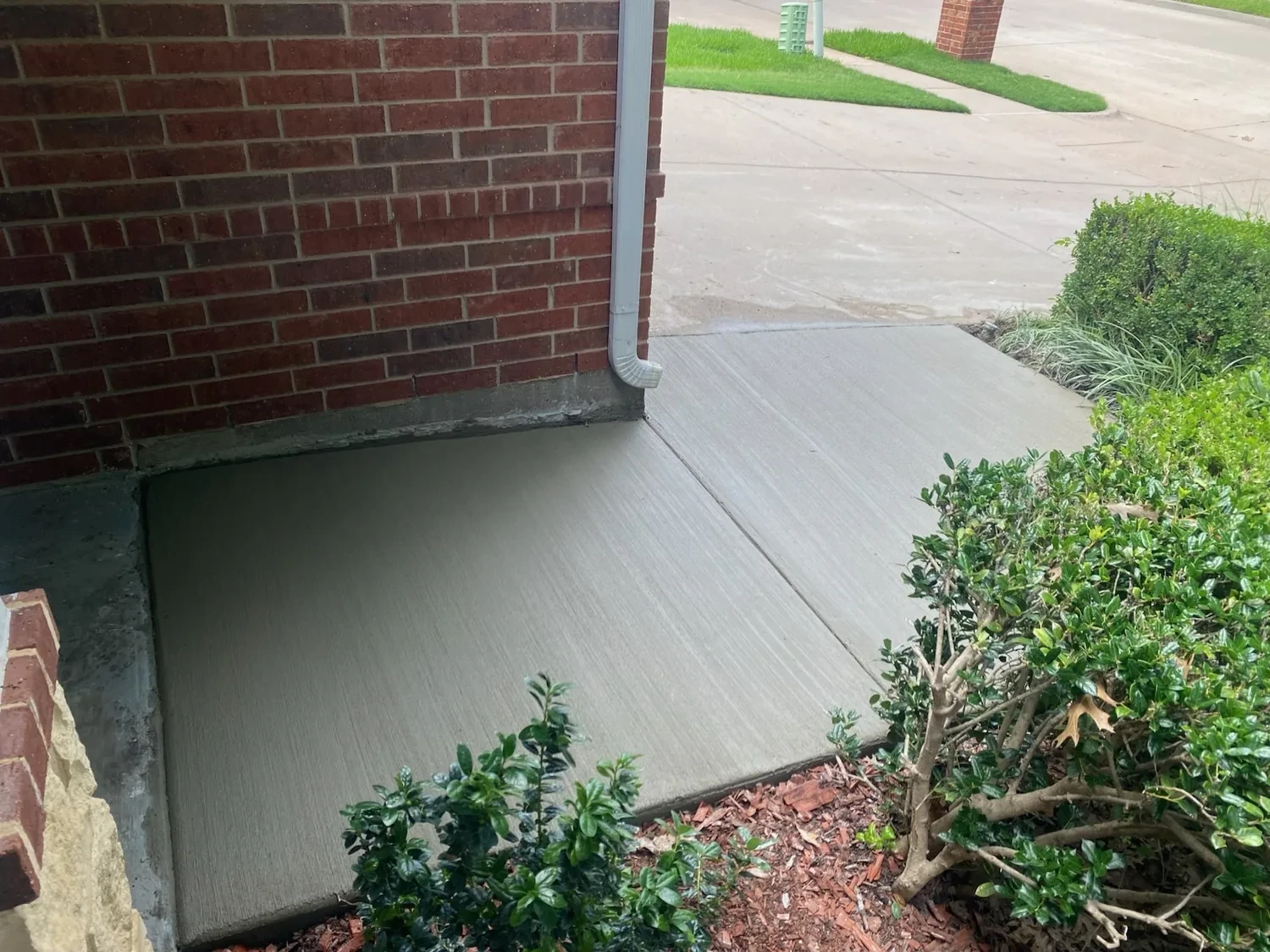
Walkways and sidewalks price on width, thickness, and base prep over loose sand, plus the slope and slip-aware finish that wet-season rain calls for. As a straight starting point, most walkways here work out to somewhere near $8 to $13 per square foot. We nail down the figure after walking the length of the run.
Often, yes. A lone panel that ground movement or roots have shoved up can usually be ground down flush or lifted and replaced on its own, with no need to tear out the entire run. We track down what raised it and steer you to the fix that lasts. On a busy corner in a growing neighborhood, clearing a lifted edge early keeps foot traffic safe.
Under the panels the loose sand soaks up and sheds water unevenly and drops them at different rates, and a high water table plus tree roots only speed that along. On the repair we rebuild the base, add fiber and mesh, and lay out fresh joints so the same movement does not just return.
Yes. We build the ramps and their approaches to the grade and surface that accessibility requires, then finish them with a slip-aware texture for wet weather. That counts for the many retirees settling across North Port as much as for anyone else. Point us to the entry and we will pour the ramp to suit the way in.
Joint spacing follows the width and thickness of the slab so movement stays under control. Too few joints is where uncontrolled cracking begins, and loose sand that drains and shifts leaves you no slack on it.
Give the slab its first few days to gain strength before anyone walks it, and add a little to that when the inland humidity is running thick. We lay out the dates for your specific pour up front.
You'll hear back from a real person, usually the same day. No call center, no runaround, no chasing us down.
Booking up fast this season. Or call (941) 258-9385